Well Pump Repair in Florida, FL
Well pump repair typically runs $373–$1,624 nationally, per our cost guide. Independent local pros serving Marion County, Lake County, Ocala and nearby areas. Describe the problem and we'll route your request — free, no obligation.
- Repair typically $373–$1,624, avg $974 (Angi, Sep 2026)
- Replacement $973–$2,822, avg $1,897 (Angi, Aug 2026)
- Free quotes from licensed local well contractors
Fast response from independent local providers. No obligation.
Typical national cost$373 – $1,624Cost guide →Local Help in Florida, FL
Private water wells in Florida fall under Part III of Chapter 373, Florida Statutes. Section 373.308 has the Department of Environmental Protection (DEP) authorize the governing board of each water management district to run a permit program for the location, construction, repair and abandonment of water wells. Once DEP has authorized it, issuing well permits is the sole responsibility of the district, a delegated local government or a local county health department, and other local governmental entities may not impose additional or duplicate requirements or fees, or set up a separate program, for permitting the location, abandonment, boring or other activities reasonably associated with installing and abandoning a groundwater well. DEP may still prescribe statewide minimum standards, and its Chapter 62-532, Florida Administrative Code, sets out water well permitting and construction requirements.
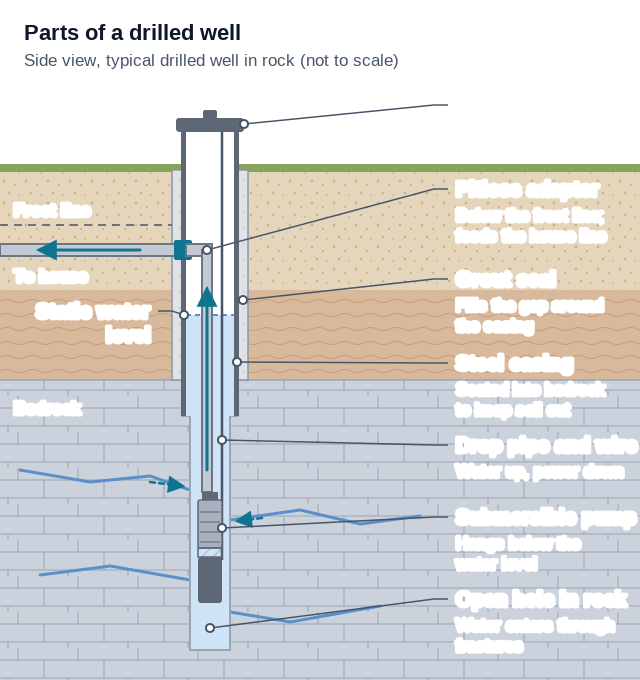
For pump work, two statutory definitions do most of the sorting. Section 373.303(2) counts locating and excavating a well as construction of water wells but expressly leaves out installing pumps and pumping equipment, and s. 373.303(5) makes a repair any action involving physical alteration or replacement of any part of a well other than a portion above ground surface. Neither definition names a particular pump or tank task. Rule 62-532.400(1) requires a permit before construction, repair or abandonment of any water well begins in an area where a district has put its permit program into effect, subject to the exemptions in statute and district rules noted below, so put the classification question to the permitting authority for the parcel before the well is opened.
Florida Service Details
What providers in this area actually see: coverage, common jobs, local pricing factors, and rules worth knowing.
Service Area Notes
- Marion County page: the Department of Health's 2026 list of local water well permitting agencies (Rev. 9/16/2026) names DOH in Marion County, and both the Southwest Florida (SWFWMD) and St. Johns River (SJRWMD) water management districts list Marion among counties where a local agency issues well permits under a delegation agreement.
- Lake County page: the same DOH list has a Lake row naming DOH in Lake County and a separate Lake--Southwest row naming SWFWMD, and SJRWMD lists Lake among its delegation agreements with local health departments.
- Cities named here are incorporated places listed under Marion County (Ocala) or Lake County (Leesburg, Clermont) in the Census Bureau's 2020 Florida place-by-county file. For any other county, the DOH list shows whether a district, a DOH county office or a local government permits wells there.
Common Jobs in Florida
- Pump, pressure tank and water conditioning equipment work by a licensed water well contractor; s. 373.323(10) lets those contractors install, repair and modify pumps and tanks in accordance with the Florida Building Code, Plumbing, Section 614 (Wells Pumps And Tanks Used For Private Potable Water Systems), and install pumps, tanks and water conditioning equipment for all water systems
- Running permanently installed pumping equipment and any necessary piping through a well seal on a cased well, as Rule 62-532.500(4)(a)3. requires
- Capping a well whose pumping equipment goes in only seasonally or periodically: Rule 62-532.500(4)(a)2. calls for a steel or reinforced concrete cover, or a valve, whenever the equipment is out, except in areas of a district that DEP designates with the permitting authority's concurrence
- Disinfecting the well and household plumbing after the repair, then having the water tested by a Department of Health certified laboratory
What Drives Pricing Here
- Whether the job is a repair of the well. If it is, a permit comes first unless a statute or the district's rules exempt the work, the permit has to be available for inspection at the well site during the repair (Rule 62-532.400(4)), and Rule 62-532.410 calls for a written report to the permitting authority on the State of Florida Well Completion Report within 30 days after the construction, repair or abandonment of any water well is completed.
- Permit fees belong to whichever office issues the permit, and s. 373.308(1) bars other local governmental entities from imposing additional or duplicate requirements or fees for the permitting it covers. No amounts are quoted here; ask the issuing office for its current fee.
- Who handles the electrical and house-side pieces. Under s. 373.323(11) a licensed water well contractor may facilitate incidental work by an appropriately licensed contractor, limited to the electrical connection of a pump, connecting a well to a residential dwelling, a pump house or pump vault of 100 square feet or less, a nonstructural well slab of 100 square feet or less, fencing and landscaping; the same subsection says Part III does not authorize a water well contractor to do any work that needs a Chapter 489 license.
- Flowing wells: Rule 62-532.500(4)(d) requires a well that flows at land surface to be controlled by valved pipe connections, watertight pump connections, or receiving reservoirs set at an altitude corresponding to the artesian head.
- Delineated areas: according to DEP, the water management districts or their delegated permitting authority permit and inspect all new potable well construction, repair and abandonment inside areas delineated for known groundwater contamination, and every new potable well there must be cleared for potable use by DOH or the county health department.
Permits & Local Rules
- Applying: under Rule 62-532.400(1) the owner, or the water well contractor on the owner's behalf, applies in writing to the permitting authority and submits any required fee with the application. Receiving the permit is permission to begin (62-532.400(3)). How long a permit stays valid, and whether and how it can be extended, is set differently in Chapter 62-532 and in each district's well chapter, so check the expiration date on your permit and ask the permitting authority about extensions before relying on one.
- Emergencies: Rule 62-532.420 lets an applicant ask by telephone for permission to begin construction, repair or abandonment when emergency conditions justify the request, and the permitting authority grants an emergency permit to avert an imminent and substantial danger to public health, safety or welfare. The applicant must put the application in writing under Rule 62-532.400 and submit it within ten days, and every other provision of the chapter still applies.
- Exemptions: each district's well chapter lists its own permit exemptions with their own conditions: Chapter 40A-3 (Northwest Florida), 40B-3 (Suwannee River), 40C-3 (St. Johns River), 40D-3 (Southwest Florida) and 40E-3 (South Florida). Read the chapter for your district, or ask the permitting authority, before relying on one. Separately, s. 373.326(1) lets a district grant an exemption from one or more Part III requirements where compliance would cause undue hardship, to the extent necessary to ameliorate the hardship and only where it can be granted without impairing the intent and purpose of Part III.
- Licensing: s. 373.323(1) requires anyone who wants to engage in business as a water well contractor to get a license from a water management district, and makes that the only water well contractor license required for construction, repair or abandonment anywhere in the state; s. 373.323(5) makes a license from any district valid in every district. Section 373.336(1)(b) makes it unlawful to construct, repair or abandon a water well, or operate drilling equipment for that purpose, unless employed by or under the supervision of a licensed water well contractor or exempt under s. 373.326.
- Owner-built wells: the s. 373.326(2) exemption lets an unlicensed person construct a well only if it is 2 inches or under in diameter, on the person's own or leased property, intended for use only in a single-family house that is the person's residence or only for farming purposes on the person's farm, with water not intended for use by the public or any residence other than the person's own, and only if the person complies with all local and state well construction rules.
Local Conditions
- USGS Ground Water Atlas chapter HA 730-G (James A. Miller, published 1990) describes the Floridan aquifer system as limestone and dolomite underlying all of Florida and calls it one of the most productive aquifers in the world. Where it contains freshwater, the atlas says, it is the principal source of water supply; south of Lake Okeechobee the aquifer contains saltwater.
- The same chapter says the surficial aquifer system, although used by a large number of people, principally is used only for domestic, commercial or small municipal supplies, and that in places a clayey confining unit over the Floridan is exposed at land surface, so wells need to be drilled through it to reach the aquifer below.
- It also calls sinkholes a natural, common geologic feature in places underlain by soluble rocks such as the limestone and dolomite that form the Floridan aquifer system.
Neighborhoods & Suburbs Served
Marion County · Lake County · Ocala · Leesburg · Clermont
Emergency Response Expectations
For an urgent repair that will alter or replace part of the well, ask the permitting authority for your county about the Rule 62-532.420 emergency permit; the Department of Health's well permitting agencies list shows which office that is. The DOH disinfection sheet also lists restarting wells or pumps that were cut off for a period of time, or a flooded well, among the times to disinfect, and it says water showing E. coli or fecal coliform should not be used for drinking, cooking or bathing.
Florida FAQs
Does replacing a well pump in Florida need a well permit?
It depends on whether the job is a repair of the well. Installing pumps and pumping equipment is left out of well construction (s. 373.303(2)), while any action physically altering or replacing a part of the well, other than a portion above ground surface, is a repair (s. 373.303(5)), and a repair needs a permit first (Rule 62-532.400(1)) unless a statute or the district's rules exempt it. Use the Department of Health's well permitting agencies list to find the office for your county and ask it before the work starts.
Who may install or repair a well pump in Florida?
Section 373.323(10) lets licensed water well contractors install, repair and modify pumps and tanks under the Florida Building Code, Plumbing, Section 614. Section 489.105(3)(m) also lists public or private water supply systems and drainage and supply wells, with the appurtenances, apparatus and equipment used in connection with them, among the things a plumbing contractor may install, maintain, repair, alter or extend without obtaining an additional local regulatory license, certificate or registration. For a job that is a repair of the well, s. 373.336(1)(b) makes it unlawful to do the work unless the person is employed by or under the supervision of a licensed water well contractor, or is exempt under s. 373.326. Ask the permitting authority which license a particular job calls for.
Is water testing required after pump work on a private well?
The Department of Health's private well page says Florida has no requirement for routine sampling of private home wells and recommends testing for coliform bacteria and nitrates every year, and lead every three years for most homeowners. It also says some county health departments enforce local rules requiring testing of newly constructed wells or repairs, naming Brevard, Broward, Citrus, Duval, Flagler, Highlands, Hillsborough, Osceola, Palm Beach, Pinellas, Sarasota and Volusia. The DOH disinfection sheet lists after well or pump repairs among the times to disinfect and says to have the water tested by a Department of Health certified laboratory once the chlorine is gone, before drinking, cooking, making ice or preparing food with it.
Can a homeowner disinfect the well after the pump is replaced?
The DOH disinfection sheet gives an owner procedure only for a well with a submersible pump and a sanitary well seal that has a removable threaded plug. For a pump in a well pit, a flowing well, or a seal without a threaded plug, it says to have the well disinfected by a licensed well contractor or licensed pump installer.
Sources
- Fla. Stat. 373.303 (definitions)
- Fla. Stat. 373.308 (well permitting programs)
- Fla. Stat. 373.323 (water well contractor licensure)
- Fla. Stat. 373.326 (exemptions)
- Fla. Stat. 373.336 (unlawful acts)
- Fla. Stat. 489.105 (contractor definitions)
- Chapter 62-532, F.A.C.: Water Well Permitting and Construction Requirements
- Chapter 40A-3, F.A.C. (Northwest Florida WMD)
- Chapter 40B-3, F.A.C. (Suwannee River WMD)
- Chapter 40C-3, F.A.C. (St. Johns River WMD)
- Chapter 40D-3, F.A.C. (Southwest Florida WMD)
- Chapter 40E-3, F.A.C. (South Florida WMD)
- Florida DOH: Well Permitting Agencies (Rev. 9/16/2026)
- Florida DOH: Well disinfection
- Florida DOH: Private well water testing
- Florida DEP: Delineated Areas
- SWFWMD: Well construction permits
- SJRWMD: Water well construction permits
- USGS HA 730-G (1990): Regional summary
- USGS HA 730-G (1990): Floridan aquifer system
- USGS HA 730-G (1990): Surficial aquifer system
- Census Bureau: 2020 Florida places by county
Last reviewed 2026-11-11
Counties in Florida
Services Available in Florida
Well Pump Repair
Well pump repair typically costs $373–$1,624 (avg $974, Angi). Most calls are above-ground fixes: pressure switch, capacitor, control box, or pressure tank.
Learn more →Well Pump Replacement
Well pump replacement typically costs $973–$2,822 (avg $1,897, Angi). Deep wells with submersible pumps cost more than shallow wells with jet pumps.
Learn more →Pressure Tank Replacement
Pressure tank replacement typically costs $300–$700 (avg $500, Angi); HomeGuide puts it at $800–$1,500. A waterlogged tank causes the pump to short-cycle, which shortens pump life.
Learn more →Pressure Switch & Control Box Repair
Pressure switch replacement costs $120–$175; control box replacement $200–$500. These are the most common well pump fixes.
Learn more →Free Tools Before You Call
Ballpark the cost or narrow down the problem before talking to a Florida provider.
Need help in Florida, FL?
Send the short form — urgent requests get priority routing.