Pressure Tank Replacement
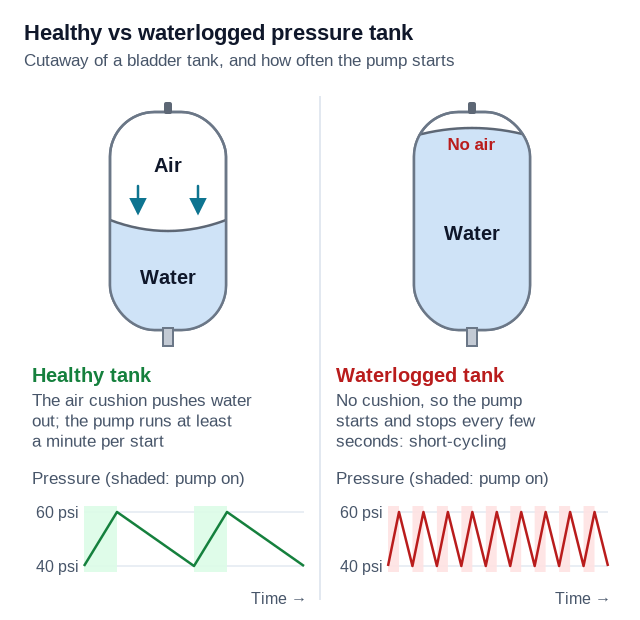
Pressure tank replacement typically costs $300–$700 (avg $500, Angi); HomeGuide puts it at $800–$1,500. A waterlogged tank causes the pump to short-cycle, which shortens pump life.
- Repair typically $373–$1,624, avg $974 (Angi, Sep 2026)
- Replacement $973–$2,822, avg $1,897 (Angi, Aug 2026)
- Free quotes from licensed local well contractors
Fast response from independent local providers. No obligation.
Typical national cost$373 – $1,624Cost guide →About Pressure Tank Replacement
Pressure tank replacement typically costs $300–$700, averaging $500 (Angi, Sep 2026); HomeGuide's installed prices run $800–$1,500, rising with tank size. A waterlogged tank causes the pump to short-cycle—turning on and off rapidly—which shortens pump life and runs up electricity.
We connect homeowners with local well contractors who diagnose tank problems and recommend the right replacement size for your household.
Common Jobs We Route
- Standard bladder tank replacement
- Large-capacity tank upgrade
- Pressure switch replacement with tank
- Tank relocation
What Affects the Price
Providers quote their own work — these are the factors that consistently move the number.
- Tank size (gallons) — larger tanks cost more
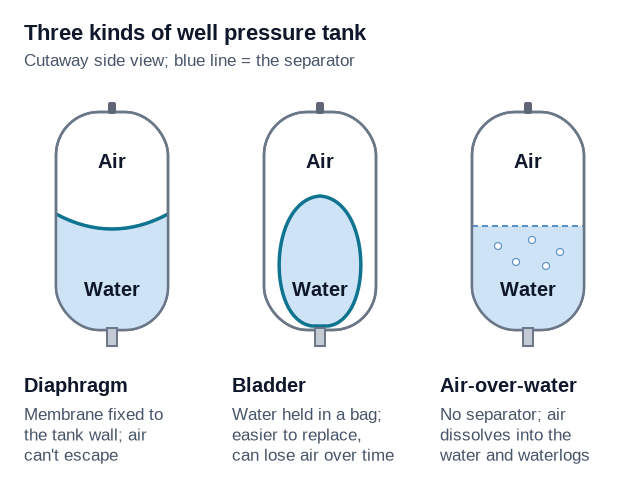
- Tank type — bladder vs diaphragm
- Installation access — tight spaces add labor
- Pressure switch condition — often replaced together
Free Pressure Tank Replacement Tools
Get a realistic number or a quick diagnosis first — free, built on published industry data.
Pressure Tank Replacement FAQs
How do I know if my pressure tank is bad?
Short cycling (pump turns on/off rapidly), no air charge when tapped, or water spurts from the air valve. A failed bladder lets water contact the tank wall.
How long do pressure tanks last?
10–15 years for quality bladder tanks. Cheaper tanks may fail sooner.
What size pressure tank do I need?
Size it by drawdown, the water the tank delivers between pump starts. Franklin Electric calls for at least a one-minute pump run, which works out to 1 gallon of drawdown per GPM of pump output for each minute of run time. A 10 GPM pump needs about 10 gallons, and on a 40/60 switch Amtrol's sizing table puts that on a 44-gallon tank (a 32-gallon tank gives only about 8.6 gallons). Our cycle test checks your current tank against the same numbers.
Pressure Tank Replacement by Area
Need pressure tank replacement?
Send the short form — no obligation.